Growing papaya

From seed to crate, in ten stages

Papaya does not forgive approximation: it grows fast, fruits early and bruises easily. Here is exactly how we run it at Kokounou, from choosing the seed to the fruit in the box.

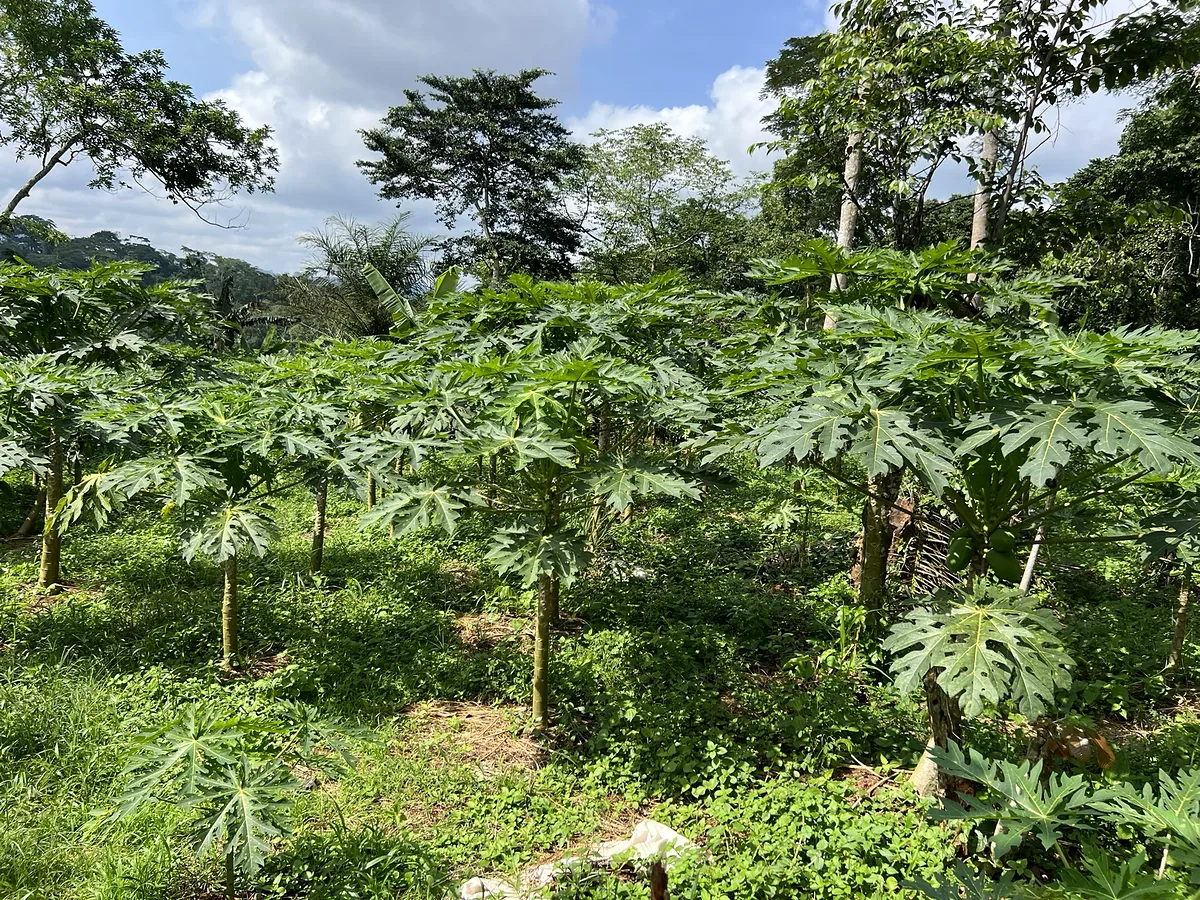
Landscape view across rows of papaya trees on a tropical farm.
The variety choice

Why dwarf varieties

A standard papaya climbs to four or five metres. After the second year the harvest is done with a pole or a ladder: the fruit drops, knocks about and reaches the customer bruised. Dwarf varieties fruit at chest height and stay hand-pickable for their whole useful cycle.

They are also faster — first flowering around month four, first ripe fruit around month eight — and steadier in wind, which easily topples a tall papaya on waterlogged ground.

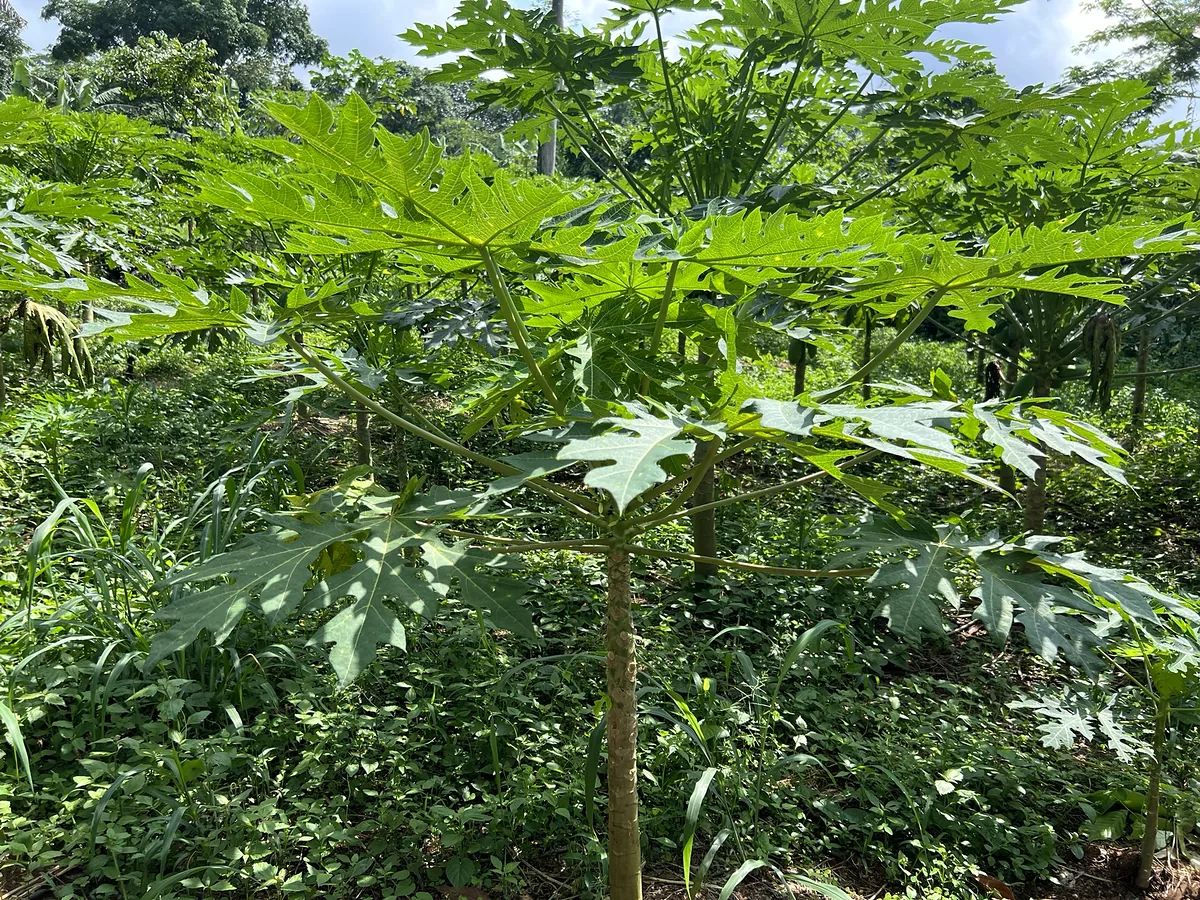
Young papaya tree with a broad crown of green leaves in the orchard.
2,5 × 2 m
Planting spacing
≈ 2 000
Plants per hectare
4 months
First flowering
8 to 10 months
First harvest
30 months
Cycle before replanting
1 male / 20
Ratio kept if the variety is dioecious
The cycle

The ten stages, in order

Every stage has a narrow window. Miss the sexing by a month and you feed plants that will never bear; harvest two days late and you lose the Extra grade.

01
Week 0

Selecting the seed

Seed is taken from ripe fruit on hermaphrodite plants already noted for productivity and flesh thickness. Washed free of the gelatinous aril and dried in the shade, it keeps only a few months — beyond that, germination collapses.

We keep two seed lots per season, from different plots, so we never depend on a single mother plant.
02
Weeks 1 to 6

Nursery

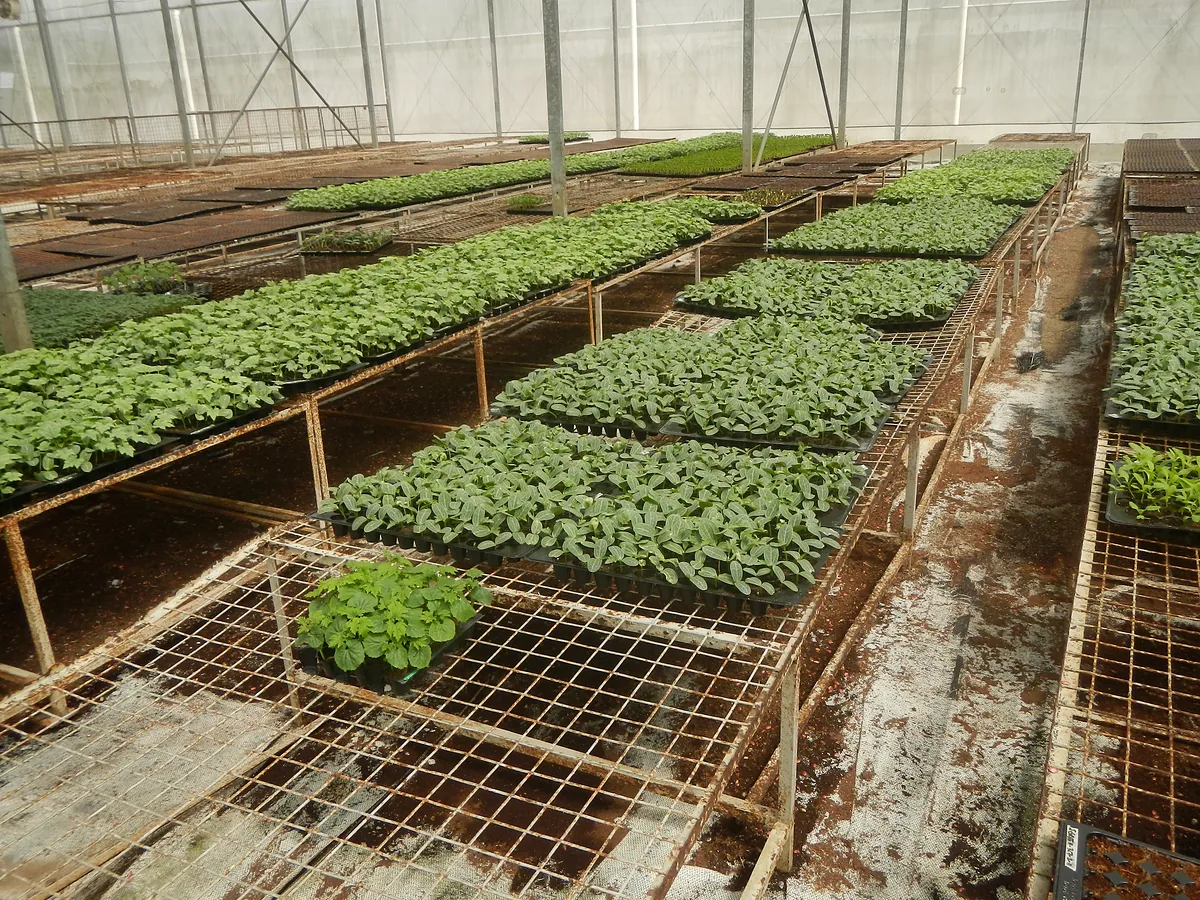
Sown in 12 cm bags filled with equal parts topsoil, sand and screened mature compost. Two or three seeds per bag, one centimetre deep. Emergence in ten to twenty days under half-shade netting, with light watering twice a day.

Only one plant per bag is kept, the most vigorous. The others are cut at the base, never pulled: the root of the keeper must not be disturbed.

Trays of young seedlings in the nursery.
03
Week 6

Preparing the ground

Holes of 40 × 40 × 40 cm at 2.5 m along the row and 2 m between rows, oriented so the prevailing wind runs along the rows. Each hole takes five to seven kilos of mature compost mixed with topsoil, then rests two weeks before planting.

Papaya hates standing water. On low ground we plant on a twenty-centimetre ridge — a root drowned for forty-eight hours is a root lost.

04
Week 8

Transplanting

Plants go to the field at four or five true leaves, twenty to twenty-five centimetres tall. We transplant late in the afternoon or under cloud, slitting the bag with the root ball intact, collar level with the soil — never buried, or it rots.

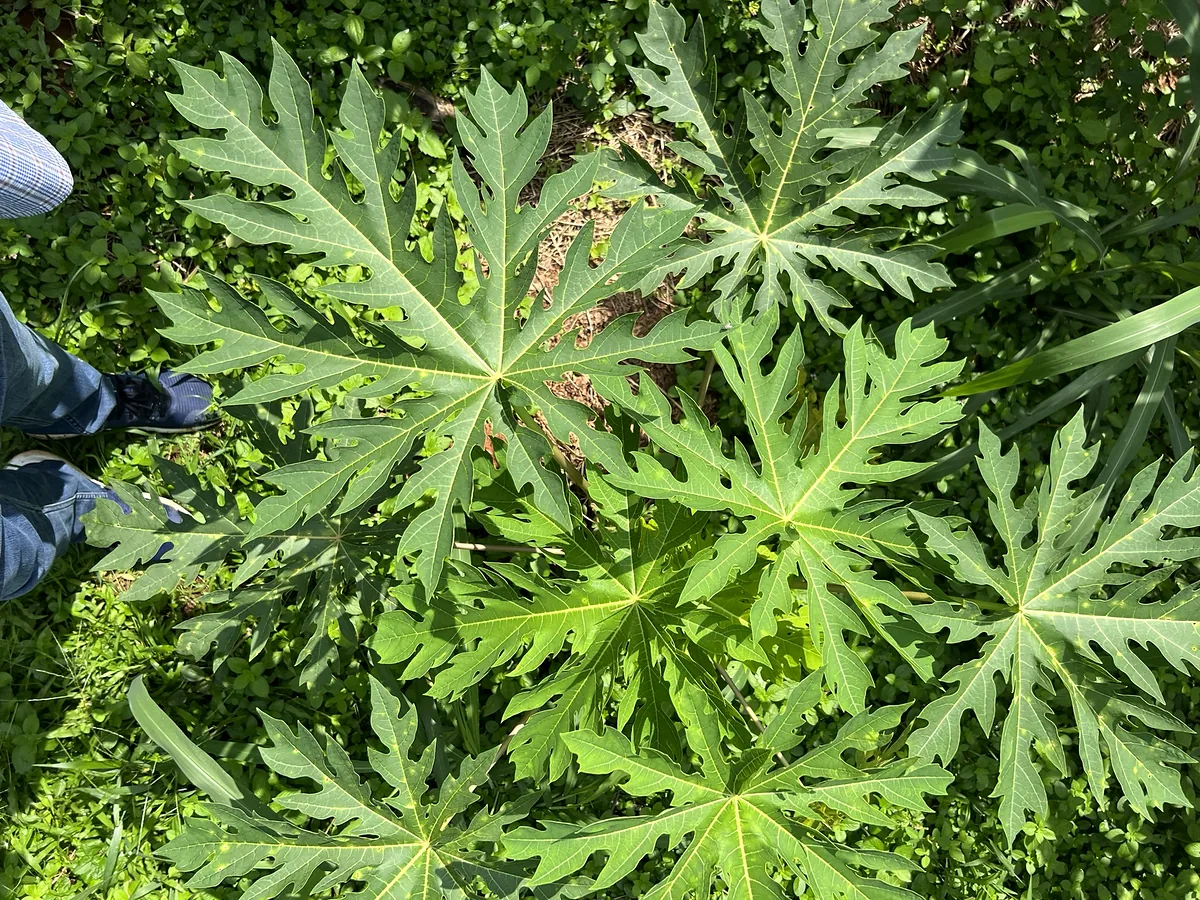
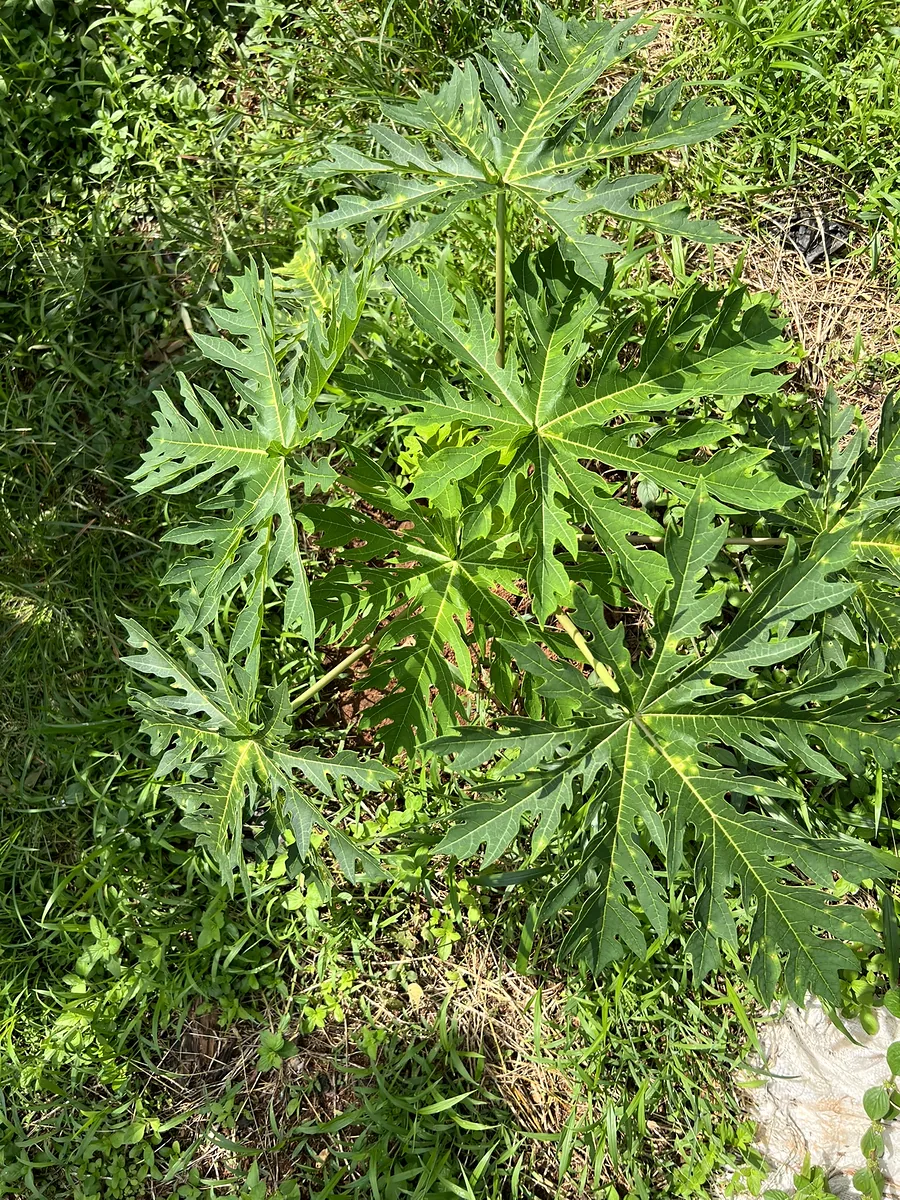
Top-down view of a young papaya plant surrounded by greenery.
05
Months 3 to 5

Sexing and thinning

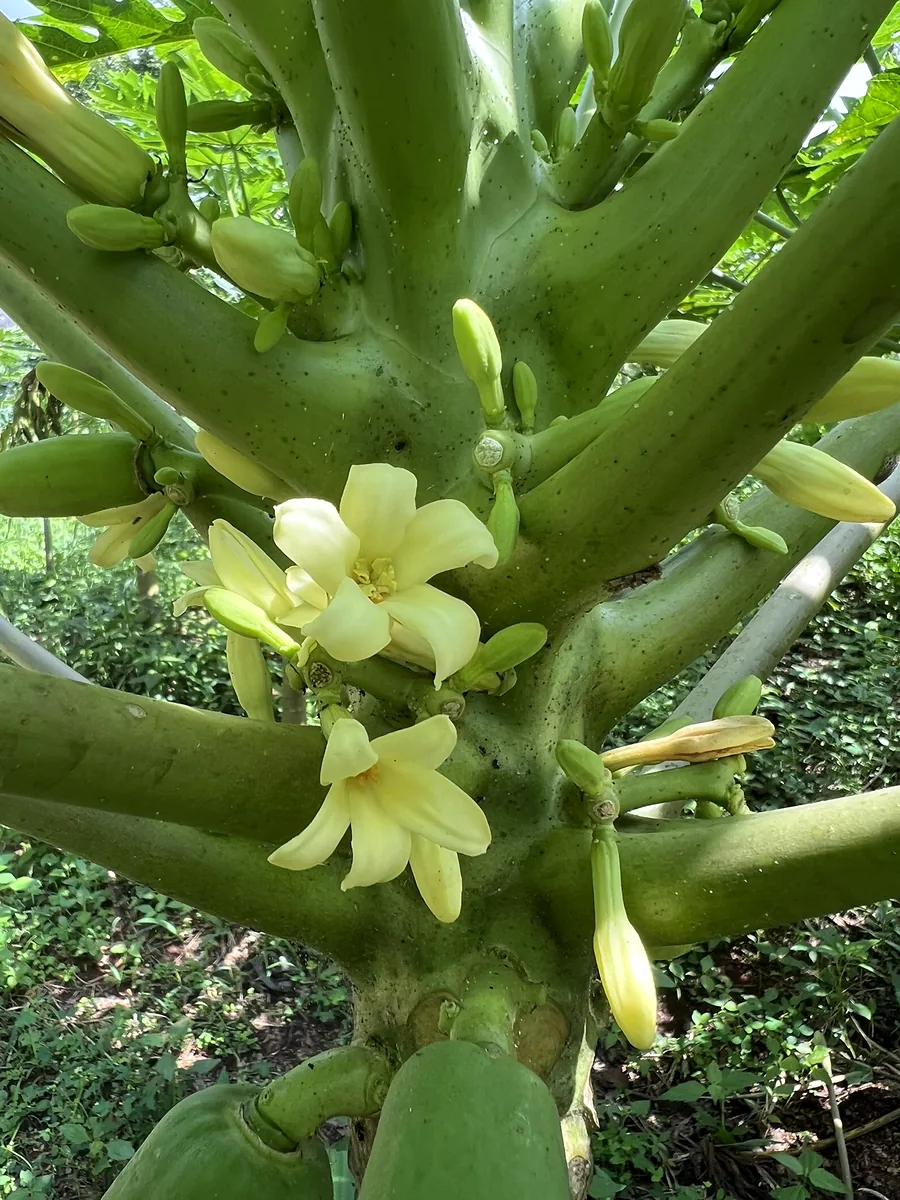
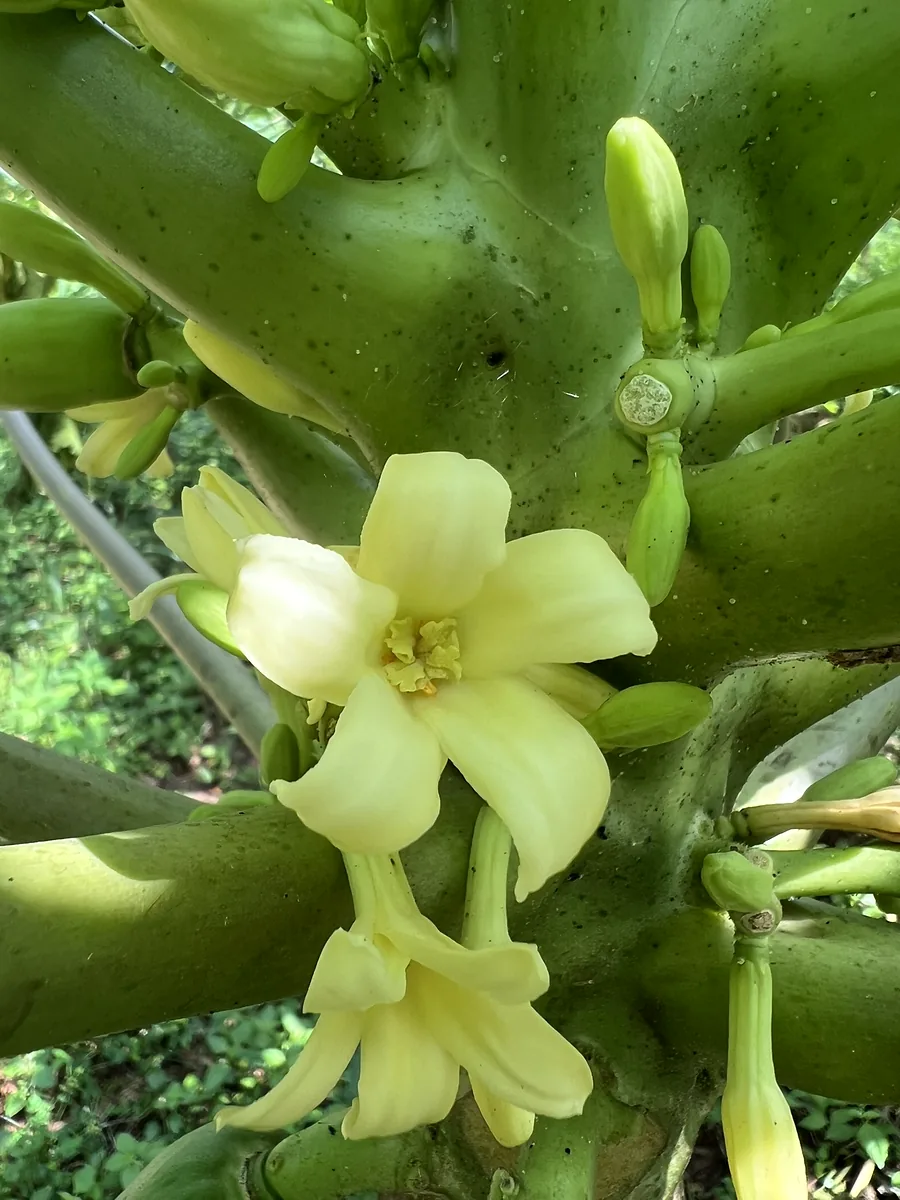
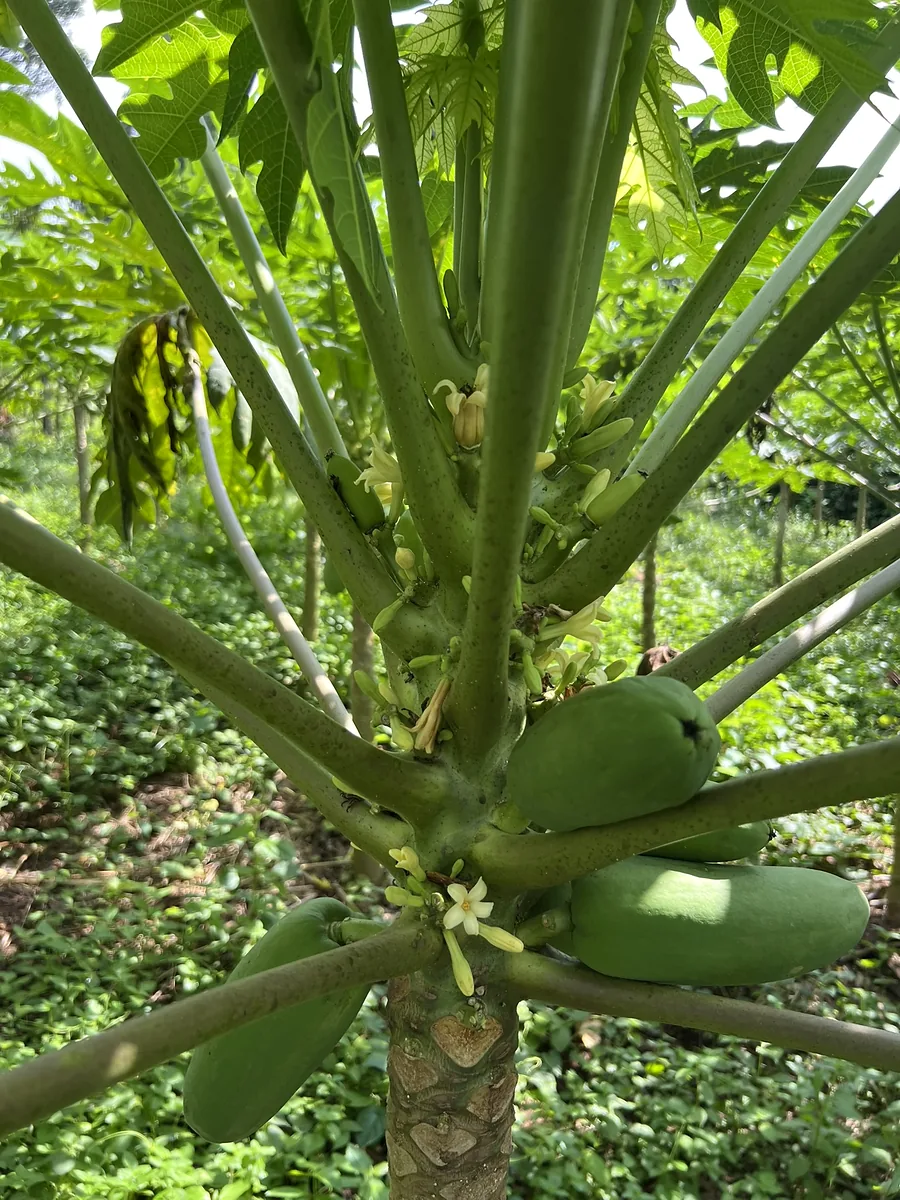
This is the stage that decides the yield. At first flowering each plant shows its sex: female flowers are large and solitary, tight against the trunk; males hang in long branched sprays; hermaphrodites, elongated, are the ones we keep — they self-pollinate and give the regular pear-shaped fruit the market wants.

Males are removed except one per twenty plants, kept at the edge as a backup pollinator. Surplus plants go to the compost.

Cream-colored papaya flowers blooming directly from the trunk.
06
Ongoing

Water and soil cover

Drip or basin irrigation depending on the plot, every two or three days in the dry season: papaya wants constant moisture but never standing water. A thick mulch of prunings and stems holds coolness, slows erosion and feeds soil life as it breaks down.

07
Every 2 months

Feeding with compost

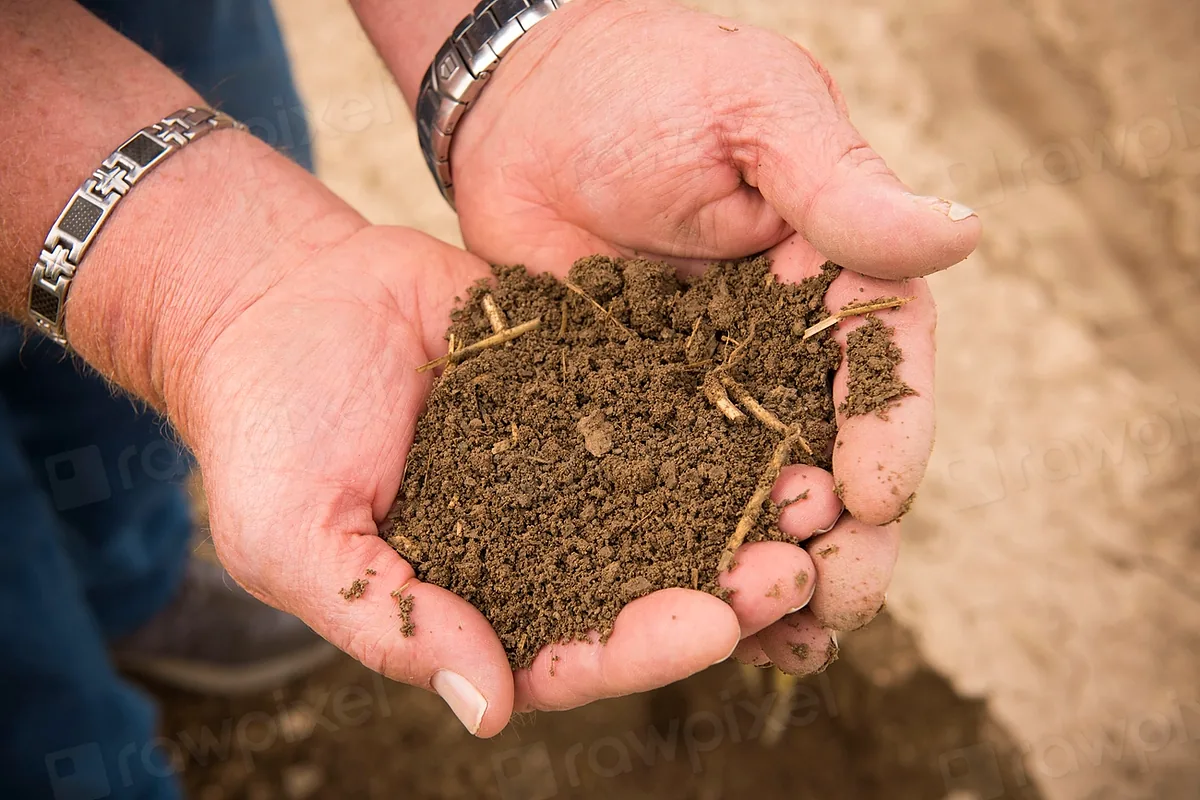
Three to four kilos of mature compost in a ring around each plant, thirty centimetres from the trunk, lightly scratched in then covered with mulch. Alongside it, a foliar spray of diluted rabbit urine every three weeks through the growth phase.

Never compost against the trunk: the collar must stay dry and open to the air.

Matured compost held in both hands.
08
Weekly

Health watch

A weekly round, leaf by leaf on young plants. We look for aphids under the leaves, mealybugs in the axils, the brown lesions of anthracnose on the fruit and, above all, the mottling and oily rings of papaya ringspot virus.

A plant hit by the virus is pulled and burned the same day. There is no treatment: the only weapon is speed.

09
Months 8 to 30

Harvest at colour break

We pick when one or two yellow stripes show on skin that is still green: the fruit has finished making its sugars and will take the journey. Cut with secateurs leaving a centimetre of stalk, never pulled. The fruit passes hand to hand into the crate and is never set on the ground.

Harvest early, before the heat rises. Fruit picked at midday sweats in the crate and loses two days of shelf life.

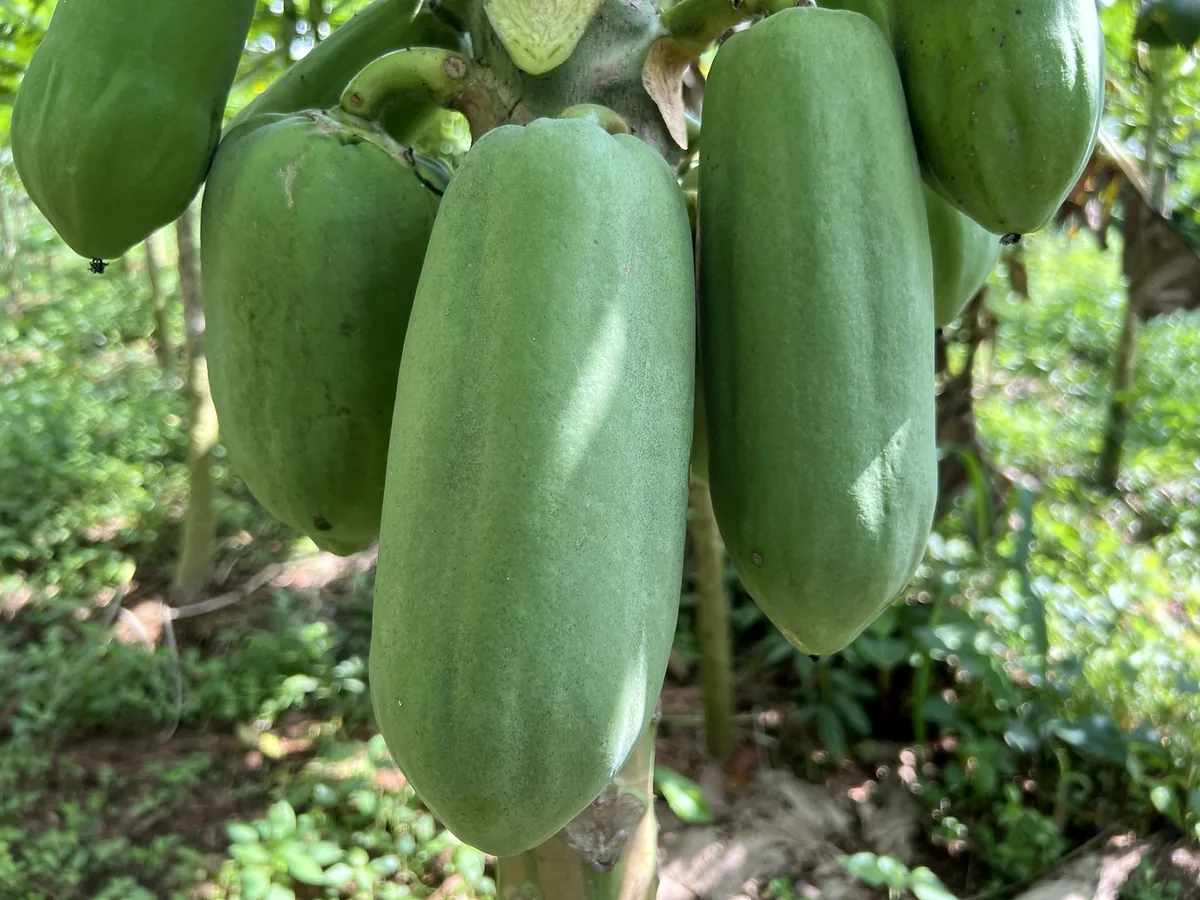
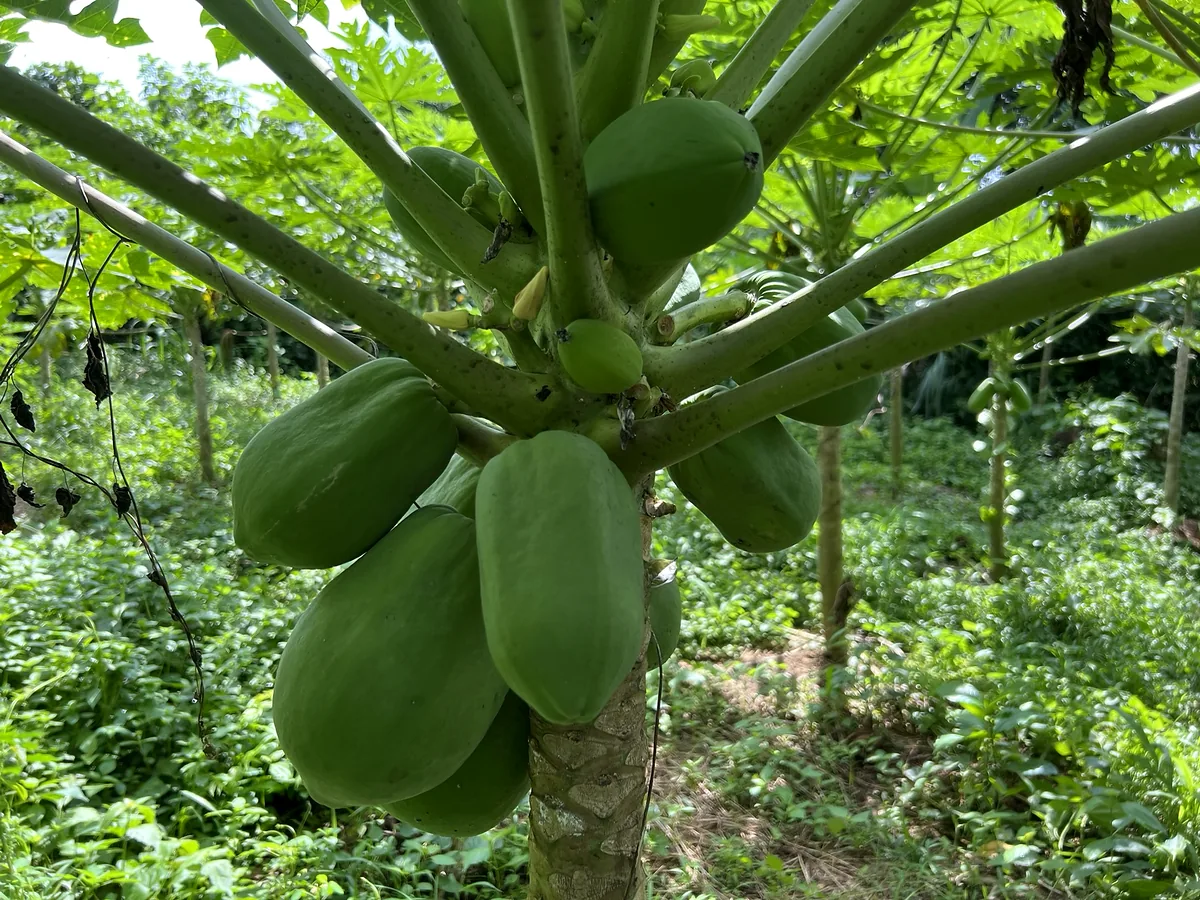
Close-up of a cluster of green papayas growing on a tree.
10
Harvest day

Draining, grading and packing

Latex drains for twenty minutes, stalk down, otherwise it scorches the skin and leaves a brown mark. The fruit is then wiped, checked one by one, graded Extra, I or II, sized, and laid in a single layer, stalk up, in cell-tray cartons.

Every carton leaves with its plot, harvest date and lot number. That is what lets us trace a complaint back to the exact row.

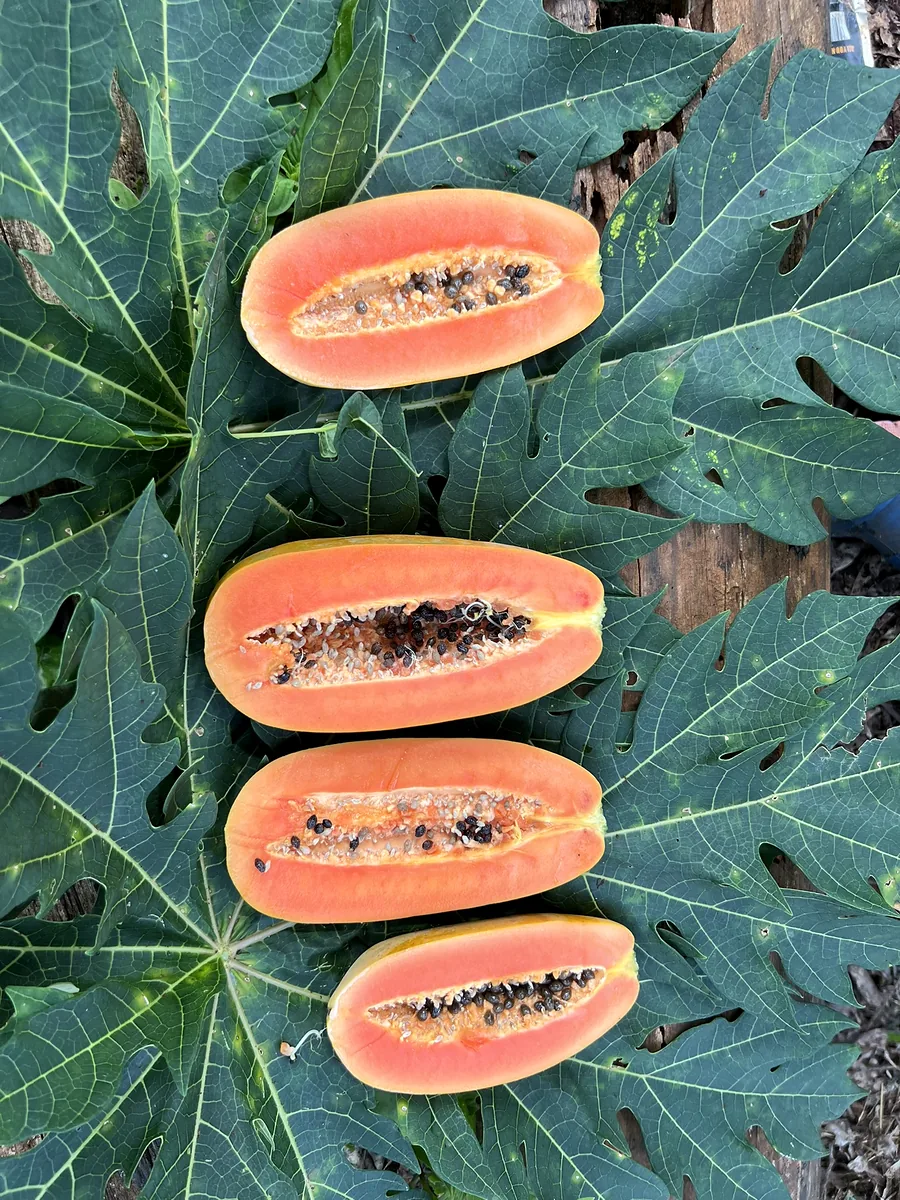
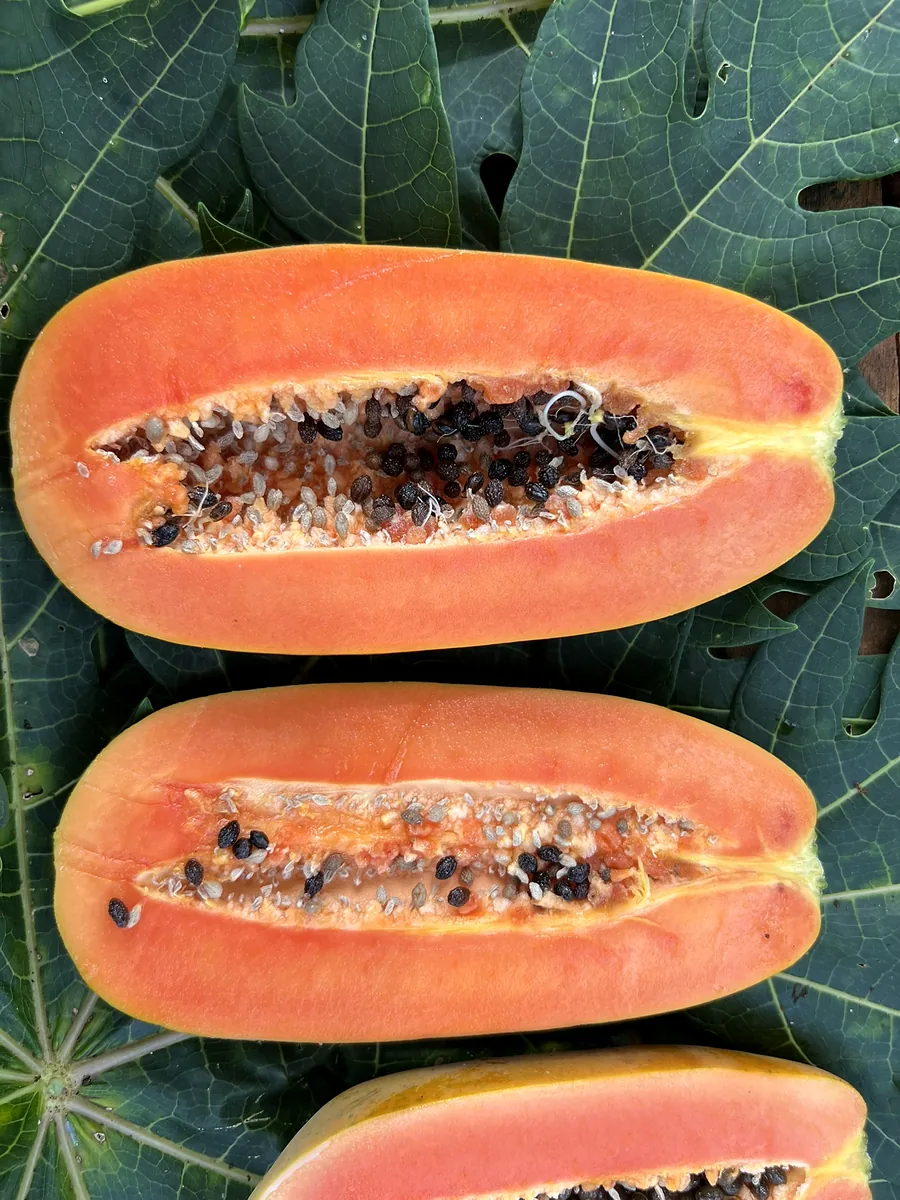
Four ripe papaya halves displayed vertically on green leaves.
Reading a fruit

When to cut, and for whom

The same tree supplies three different markets depending on the day you cut. Skin colour decides.

Full green

Uniformly green skin, white firm flesh, abundant latex. For cooking: salads, stir-fries, preserves.

Colour break

One or two yellow stripes. This is the stage for distant fresh sales: the fruit finishes ripening in three to five days at the customer’s end.

Three-quarters yellow

For local markets and next-day delivery. Orange, fragrant flesh, still firm enough to slice.

Fully ripe

Yellow-orange skin, yielding under the thumb. It no longer travels: it goes straight to the workshop, as pulp or jam.

What we watch for

The papaya grove’s four enemies

Without synthetic pesticides, defence rests on observation, plot hygiene and preparations made on site. Here is what we look for and what we do.

Problem What you see What we do Level
Papaya ringspot virus Yellow leaf mottling, oily rings on the fruit, distorted young leaves Immediate removal and destruction; control of the aphid vectors; plot rotation High risk
Anthracnose Soft, circular brown lesions on ripening fruit Colour-break harvest, draining, opening up the canopy, removal of affected fruit Watch
Mealybugs White cottony masses in leaf axils and under the fruit Spray of diluted rabbit urine and soft soap; keeping ants away Watch
Collar rot Soft brown trunk at the base, sudden wilting of the whole plant Ridge planting, drainage, collar kept clear, no mulch touching the trunk High risk
The plot

Twelve months in the grove

What next

A question, a volume, a visit?

Households, wholesalers, processors, schools and hospitals: tell us what you need. We reply within 48 hours.