The animals are not beside the crops
Pigs and rabbits are the piece that makes the whole farm turn. They supply meat to sell but, above all, the raw material for the compost and the foliar treatments. Without them we would have to buy fertiliser — and the loop would stop.
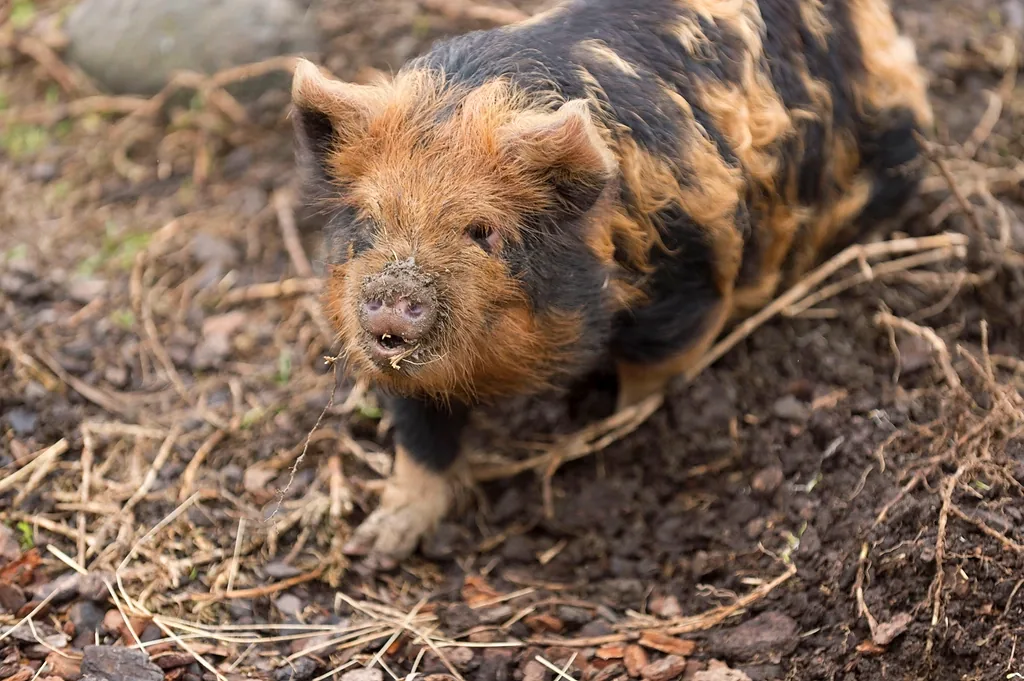
The pigs
The pigs are housed on a washable concrete slab, under a wide-open shelter that lets air through without letting driving rain in. Each pen has a strawed lying area and a sloped dunging area, scraped twice a day.
Feeding combines a local cereal base with orchard grading offcuts and peelings from the processing workshop — perfectly sound fruit, simply too ripe or too marked to sell. Nothing that leaves the packing station is thrown away.
- Separate strawed lying and dunging areas
- Twice-daily scraping: slurry goes straight to the composting pad
- Feed topped up with orchard grading offcuts
- A herd record per pen: arrivals, treatments, weights, departures
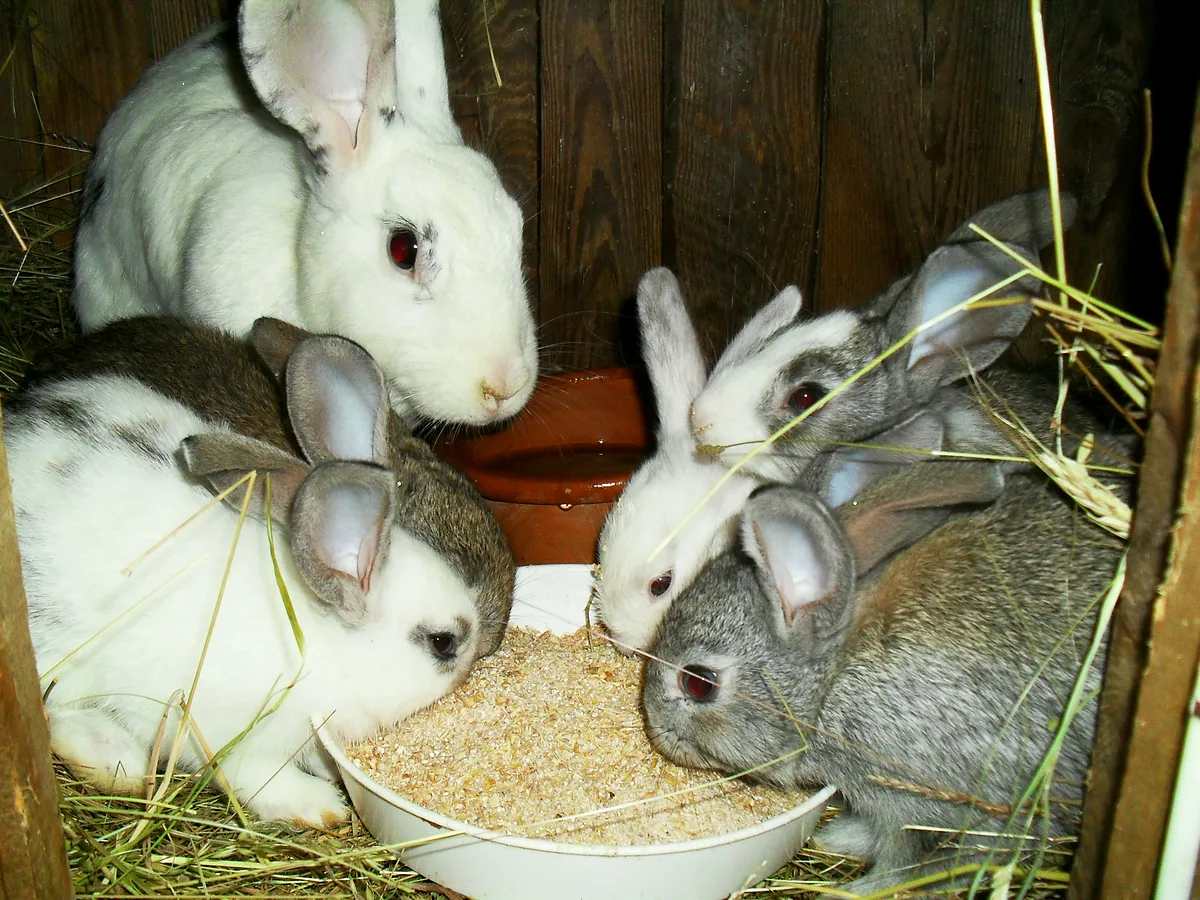
The rabbits
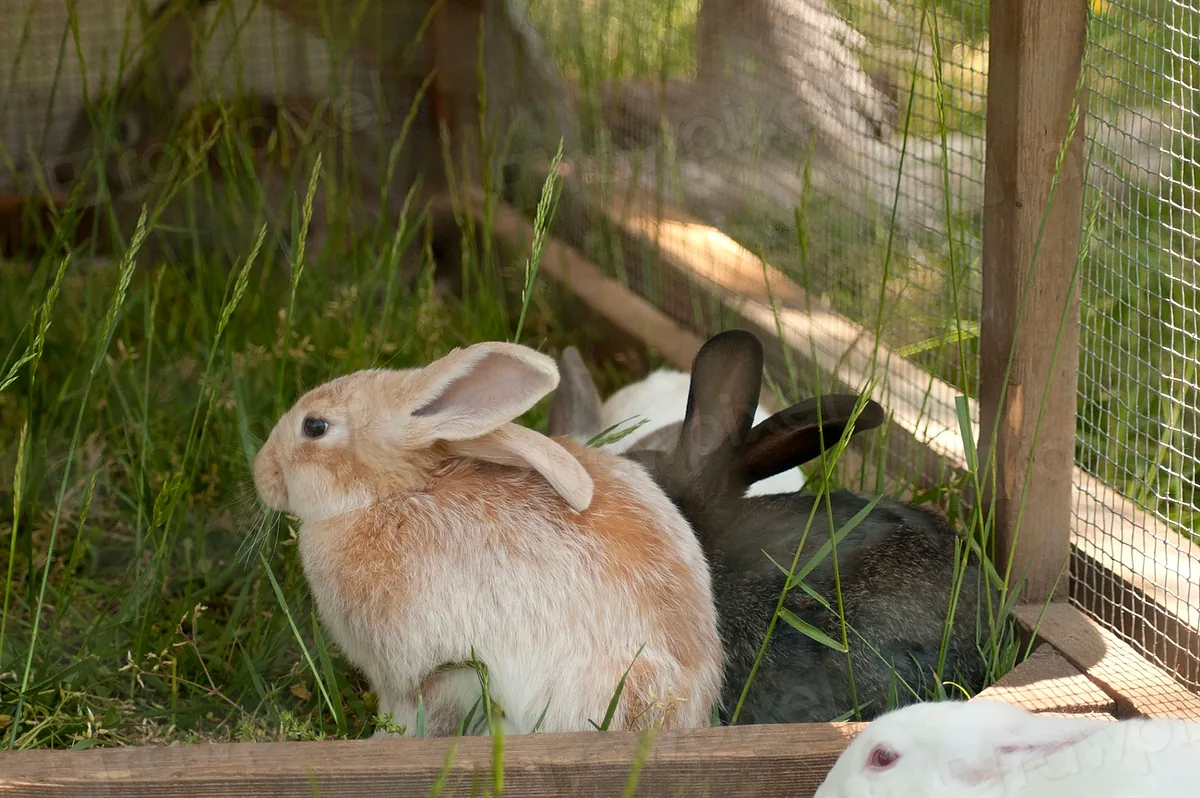
The hutches sit on slatted floors, raised, in the shade and well ventilated — a rabbit copes badly with heat and even worse with stagnant damp. Each cage opens onto a service corridor so the daily inspection takes minutes, not an hour.
Under the slats, sloping sheets separate the droppings from the urine. The droppings, dry and very high in nitrogen, join the compost windrow. The urine runs into a closed drum where it ferments for three weeks before becoming our foliar treatment.
- Raised hutches, shaded and permanently ventilated
- Droppings and urine separated as they leave the cage
- Fresh green forage daily, topped up with pellets
- A card per cage: litters, weanings, health status
What we hold ourselves to
A stressed animal eats badly, grows badly and falls ill. Welfare is not only a matter of principle: it is the condition for the livestock to produce both decent meat and sound fertilising material.
Clean water at all times
Drinkers checked morning and evening, cleaned weekly.
Air and shade
Open buildings, oriented to catch the breeze, never in full sun.
Controlled stocking
Room to lie down, turn around and get away from the others.
Daily observation
One round a day, animal by animal. A problem seen early is solved without medicine.
Sound feeding
A local base, green forage, orchard offcuts. No growth promoters.
Calm handling
No shouting, no stick, corridors designed so the animal moves on its own.
What livestock produces, beyond meat
| What comes out | Where it goes | Why |
|---|---|---|
| Pig slurry + bedding | Compost windrow | Brings nitrogen and bulk; the straw bedding provides the carbon. |
| Rabbit droppings | Compost windrow | Very high in nitrogen, they speed up the heat-up phase. |
| Rabbit urine | Foliar treatment | Fermented then diluted: a nitrogen feed and a repellent against certain pests. |
| Orchard grading offcuts | Animal feed | The loop closes: unsellable fruit comes back to feed the animals that feed the tree. |
Sold by reservation, traced like the fruit
We do not chase volume: production is matched to orders from butchers, restaurants and families nearby. Every animal is identified and its record follows the cutting.
Farm pork
Whole carcass or cuts as required. About three weeks’ notice to reserve.
Farm rabbit
Oven-ready, 1.2 to 1.6 kg. Steady availability all year.
A question, a volume, a visit?
Households, wholesalers, processors, schools and hospitals: tell us what you need. We reply within 48 hours.