Quality that can be documented, lot by lot
Our production and packing rules follow the OECD and Codex Alimentarius standards for papaya, and the UNECE standard for dried fruit. These are not logos: they are criteria every fruit has to pass before it goes into a box.
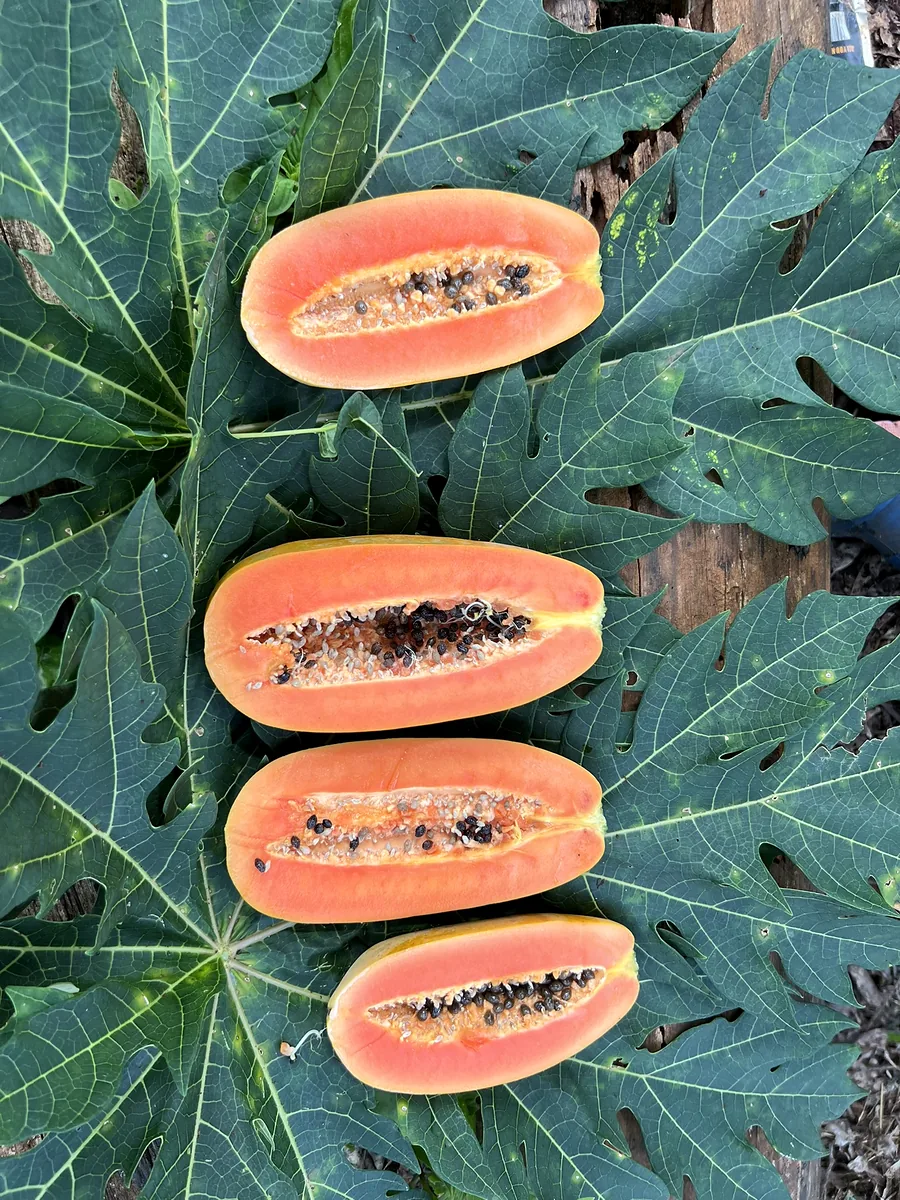
Four conditions, on every fruit shipped
Whatever the class, a fruit that fails any of these four does not ship. It goes down to the processing workshop, or to the compost.
Whole and sound
No open wounds, no marked bruising, free of pest damage and rot. One affected fruit contaminates the whole layer.
Clean
Practically free of any visible foreign matter: soil, dried latex residue, plant debris.
Firm
Able to withstand handling and transport to destination without collapsing under its own weight in a stack.
At controlled ripeness
Skin and flesh colour checked at grading, consistent with the stated destination and delivery time.
Extra, I and II — what separates them
The three classes share the same minimum requirements. What changes is the tolerance for appearance defects — and so the fruit’s destination.
Superior quality
Shape, development and colouring characteristic of the variety. No defects, apart from very slight surface blemishes affecting neither general appearance nor keeping quality.
Good quality
Slight defects of shape, colouring or skin allowed, within a limited surface area and without affecting the flesh or the fruit’s keeping quality.
Marketable quality
More visible appearance defects, provided the fruit keeps its essential characteristics of quality, keeping and presentation.
A lot is sample-checked as it leaves the packing station. The size and quality tolerances applied are those of the standard, and the check result is recorded against the lot number.
The sizes we ship
Size is set by fruit weight. Within a single package the weight spread between fruits stays contained, so the presentation is even.
| Size code | Weight per fruit | Fruits per 3 kg box | Typical use |
|---|---|---|---|
| A | 450 – 700 g | 4 – 6 | Retail, single portions |
| B | 700 – 1 000 g | 3 – 4 | Retail and catering |
| C | 1 000 – 1 400 g | 2 – 3 | Families, canteens |
| D | > 1 400 g | 2 | Processing, cutting |
The UNECE standard, applied to the letter
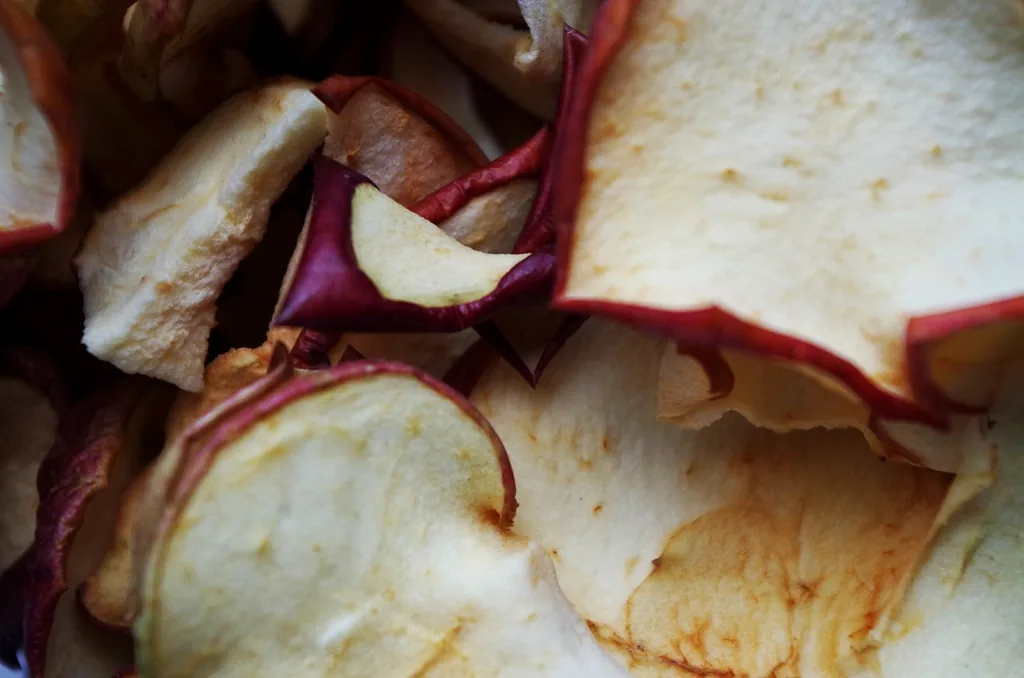
Drying is the step where a mistake cannot be recovered. Under-dried fruit moulds in the pouch; over-dried, it turns brittle and loses its taste.
≤ 18 %
Checked by weighing before and after oven drying, on every batch.
6 mm
Even, so the whole tray dries at the same rate.
None
No sulphites, no added sugar, no colouring.
9 months
In a sealed pouch, away from light and heat.
From a crate back to the row
Every package carries a lot number. Behind that number we keep the plot, the date and time of harvest, the picking team, the class assigned and the check result. A complaint is settled by reading one line, not by arguing.
What appears on every package
- Identification of the packer and the place of production
- Nature of the produce and the variety
- Class: Extra, I or II
- Size code and number of fruits
- Lot number, plot and harvest date
- Net weight
Results are published — including the bad ones
Yields by plot, harvest calendars, downgrade rates and the prices we charge are published regularly in the farm journal. A buyer who wants to check our consistency does not have to take our word for it.
A question, a volume, a visit?
Households, wholesalers, processors, schools and hospitals: tell us what you need. We reply within 48 hours.