The farm

A farm that built itself as a loop

We did not start by doing everything. Each activity grew out of a problem the previous one created — and it was by linking them together that the farm eventually came to stand on its own.

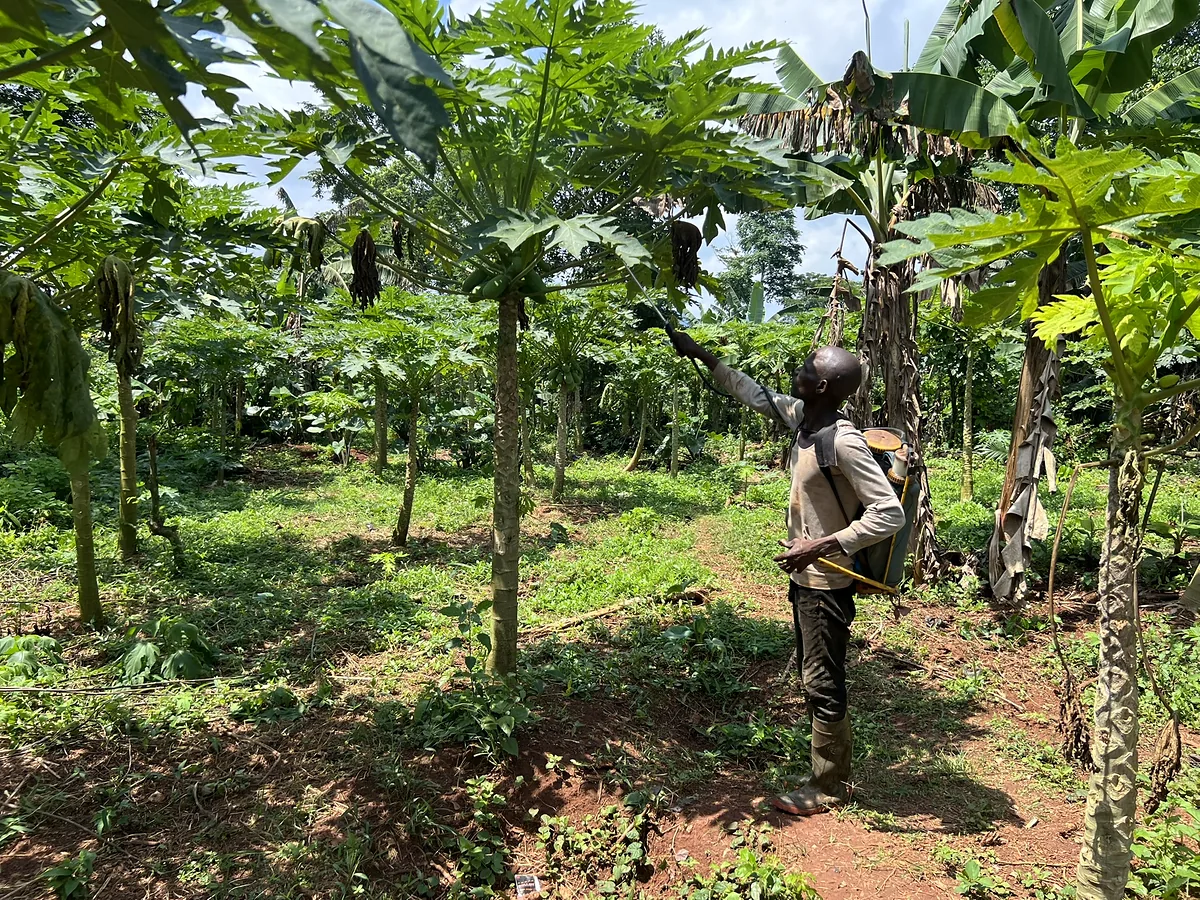
Farm worker inspecting papaya trees in a tropical orchard.
Our path

Four stages, in the order they came

I
The beginning

The dwarf papaya grove

We chose dwarf varieties: hardier, faster to bear and, above all, harvestable by hand without a ladder. The quality showed immediately — fewer impacts, firmer fruit on arrival, fewer rejections from the buyer.
II
Then

The orchard, against risk

A single crop means a single disease can take everything, and income concentrated into a few weeks. We planted mango, avocado, plum and lemon: the soil works better, pests lose the trail, and money comes in almost all year.

III
Next

The pigs and the rabbits

Fertiliser was expensive and came from far away. So we brought in the animals: they give meat to sell and, above all, what the trees need. From that day on we have not bought a single bag of fertiliser.

IV
Today

The workshop and the school

Class II fruit is no longer lost: it is dried, turned into jam or pulp. And the farm opens its gates to pass the method on to anyone who wants to build the same loop at home.

The site

Choosing land for an integrated farm

The farm’s acreage grows with land opportunities. What does not change are the criteria: closeness to markets so fragile fruit gets out fast, water available all year, and road access that stays usable in the rainy season.

The land is then zoned: the papaya grove on the best-drained ground, the orchard around the edge as a windbreak, the livestock buildings downwind of the houses, and the composting pad between the two — close enough to the hutches to keep hauling short, far enough from the plots to stay out of the way.

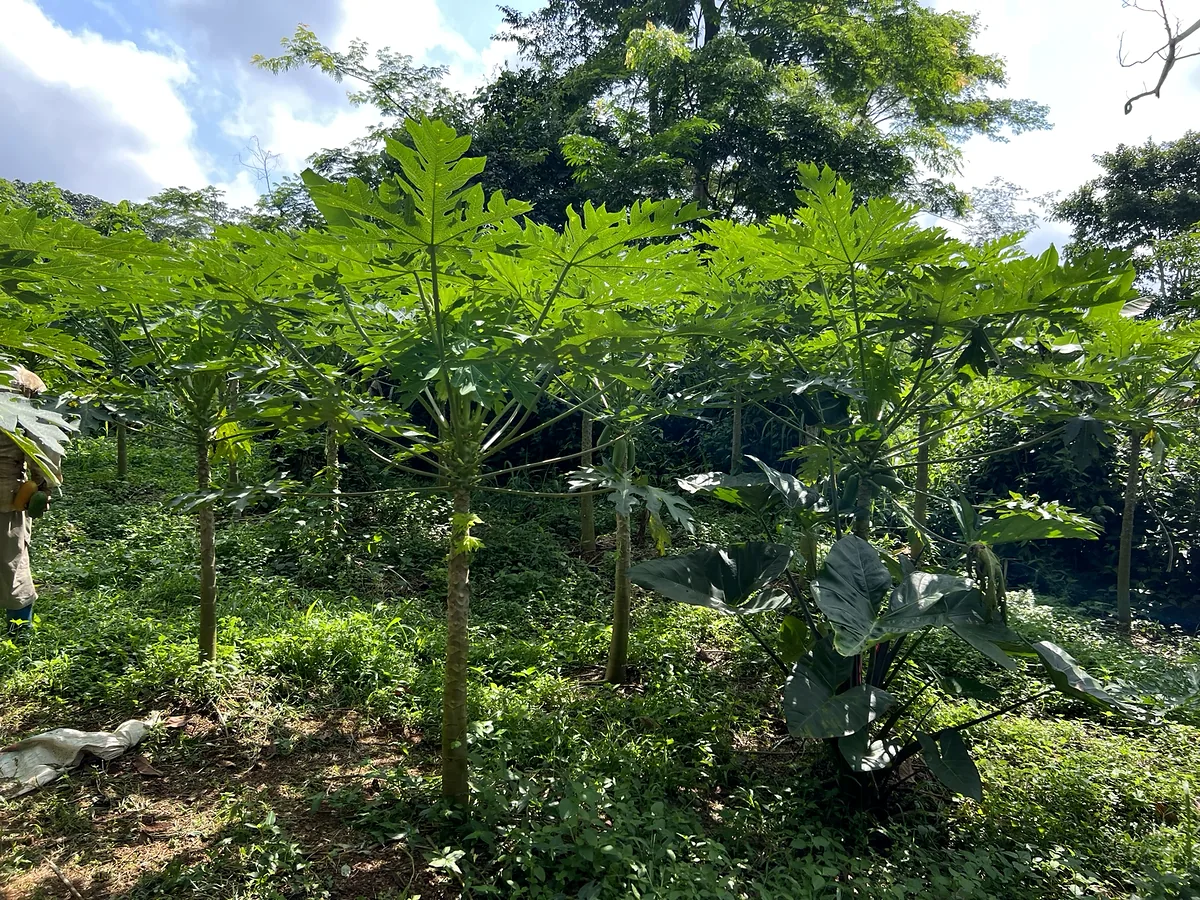
Wide view of mature papaya trees growing in a tropical orchard.

Papaya grove

Plots P-01 to P-04, on the best-drained soils, rows aligned with the prevailing wind.

Orchard

As a belt: mango, avocado, plum, lemon. A windbreak and a second income.

Livestock

Piggeries and hutches downwind, on a washable slab, with slurry and urine collection.

Composting pad

Windrows sheltered from driving rain, between the livestock and the plots.

Workshop and cold room

Packing station, dryers, vats and a quality-control lab.

Training room

A covered space beside the demonstration plots, for practical sessions.

What holds us

Three principles, held since the first seed

Soil first

Pig slurry and rabbit manure are composted on site. It is the only fertiliser our papaya trees have ever known — and it costs nothing to buy.

The rabbitry heals

Nitrogen-rich rabbit urine is collected and diluted. It feeds the leaves and keeps pests away, without a gram of synthetic chemistry.

Knowledge circulates

Every trial is recorded, published, then taught. A model is only worth something if a neighbour can rebuild it on their own land.

Around the farm

The people who keep the loop turning

“I built three hutches after the training. My maize has not seen a bag of fertiliser since.”

Neighbouring grower
Compost & natural treatments course

“We know where the fruit comes from, the day it was picked, which plot. For a canteen, that changes everything.”

School catering manager
Institutional buyer

“The papayas arrive firm and whole. We can keep them on the shelf three days longer.”

Wholesaler, city market
Classes Extra and I
What next

A question, a volume, a visit?

Households, wholesalers, processors, schools and hospitals: tell us what you need. We reply within 48 hours.