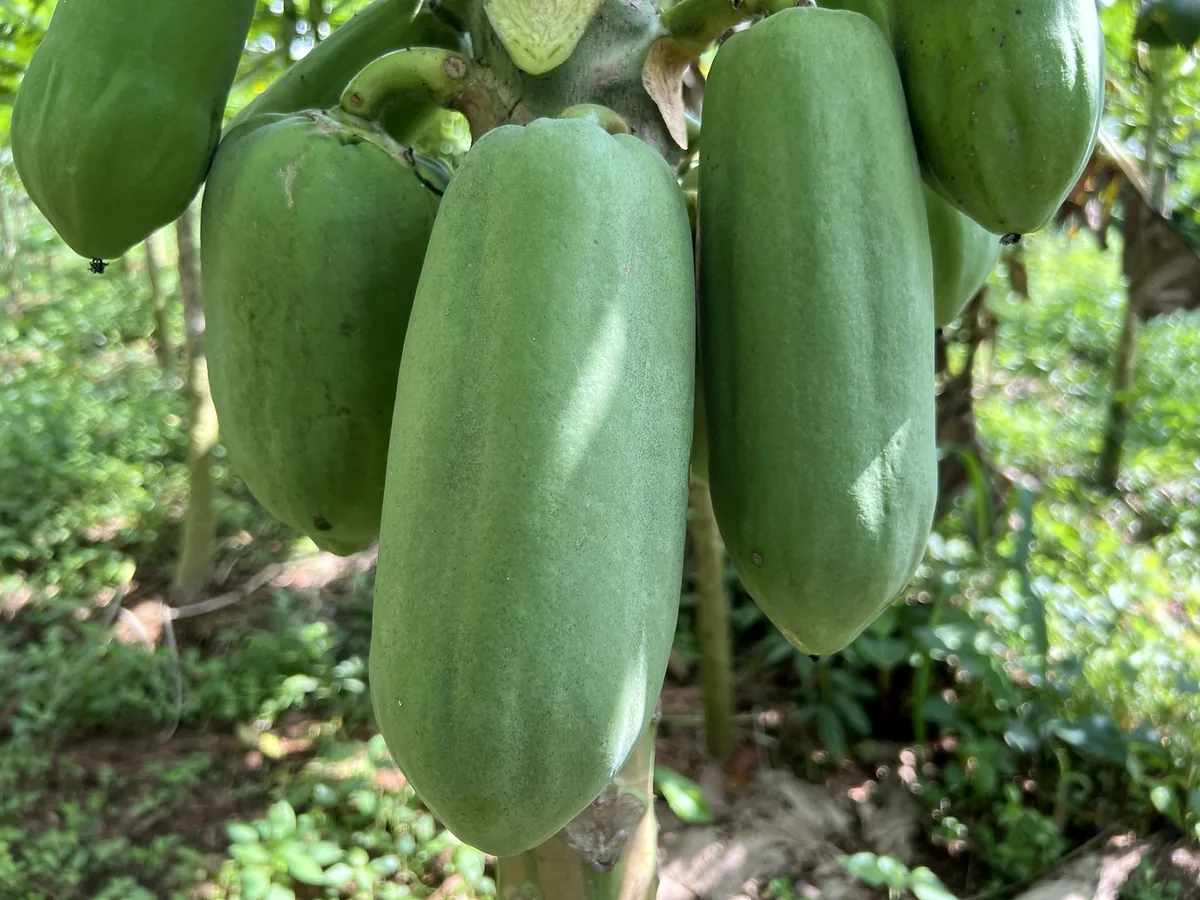
The question we are asked most often in training is not how to plant a papaya, but when to pick it. That makes sense: ten months of work come down to a decision made in thirty seconds in front of the tree.
The sign that matters
On a fruit still entirely green, a first yellow stripe appears, usually along a rib, running from the tip towards the stalk. That is colour break. At that exact moment the fruit has finished laying down its sugars: it will keep ripening once picked, but it will not get any sweeter. Before that, it stays bland whatever you do.
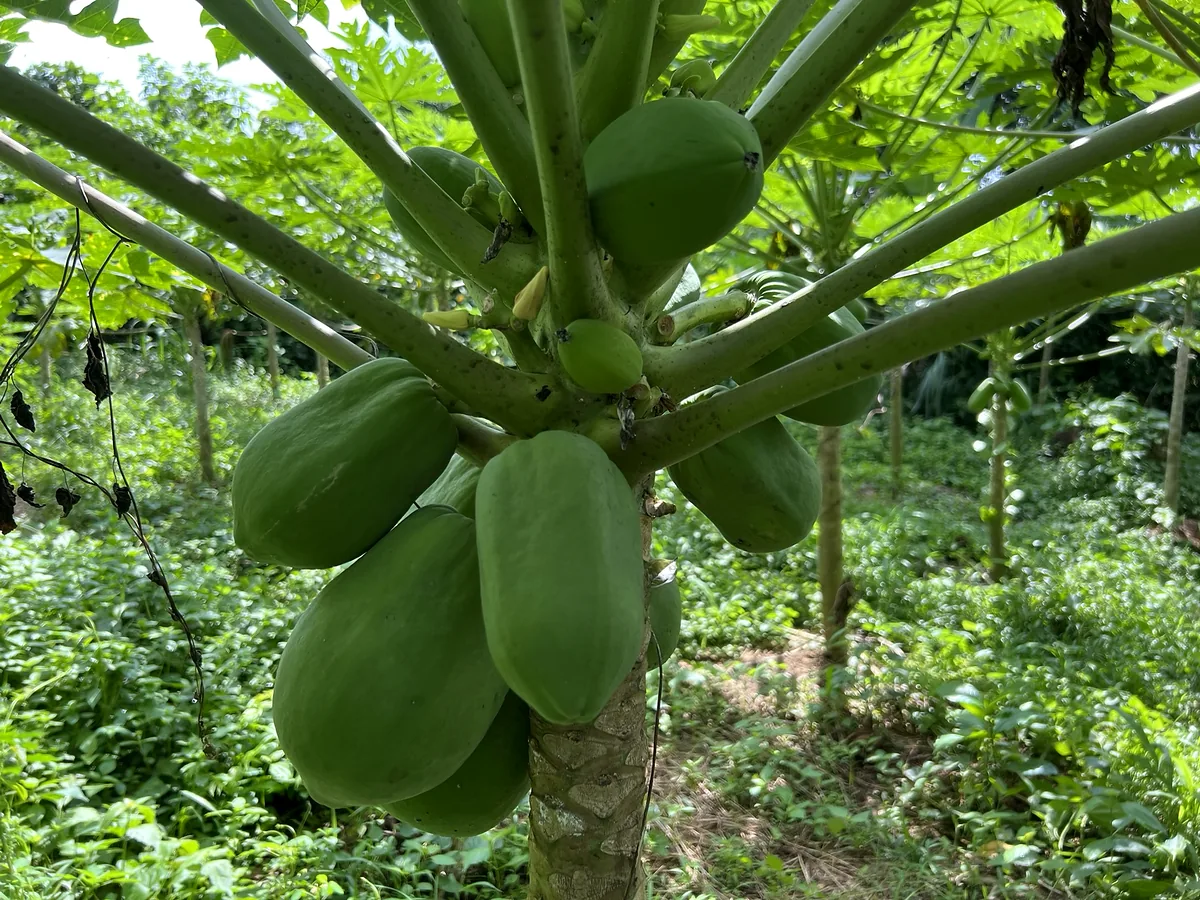
The stage depends on the journey
A fruit going to a market five hours away is not cut at the same stage as one delivered next morning three kilometres away. We work with four stages, and the customer decides.
- Full green: for cooking, salads and preserves. Keeps well, travels without trouble.
- Colour break, one or two stripes: distant fresh sales. The customer finishes the ripening.
- Three-quarters yellow: local markets and next-day delivery.
- Fully ripe: no longer travels. Straight to the workshop, as pulp or jam.
The handling that ruins it
Three mistakes are enough to cost a grade on a fruit grown perfectly for ten months. Pulling instead of cutting, which tears the insertion and opens a door to rot. Setting the fruit on the ground, even once. And skipping the latex draining.
Finally, the hour. A fruit picked at midday is hot; it sweats in the crate and loses two days of shelf life. We harvest early, and the crate goes into the shade immediately.